I would like to, if I may, talk to you all about justice. More than that, as Linda had suggested the theme of “Medicine under focus” as our theme, I want to talk about “Justice through science.”
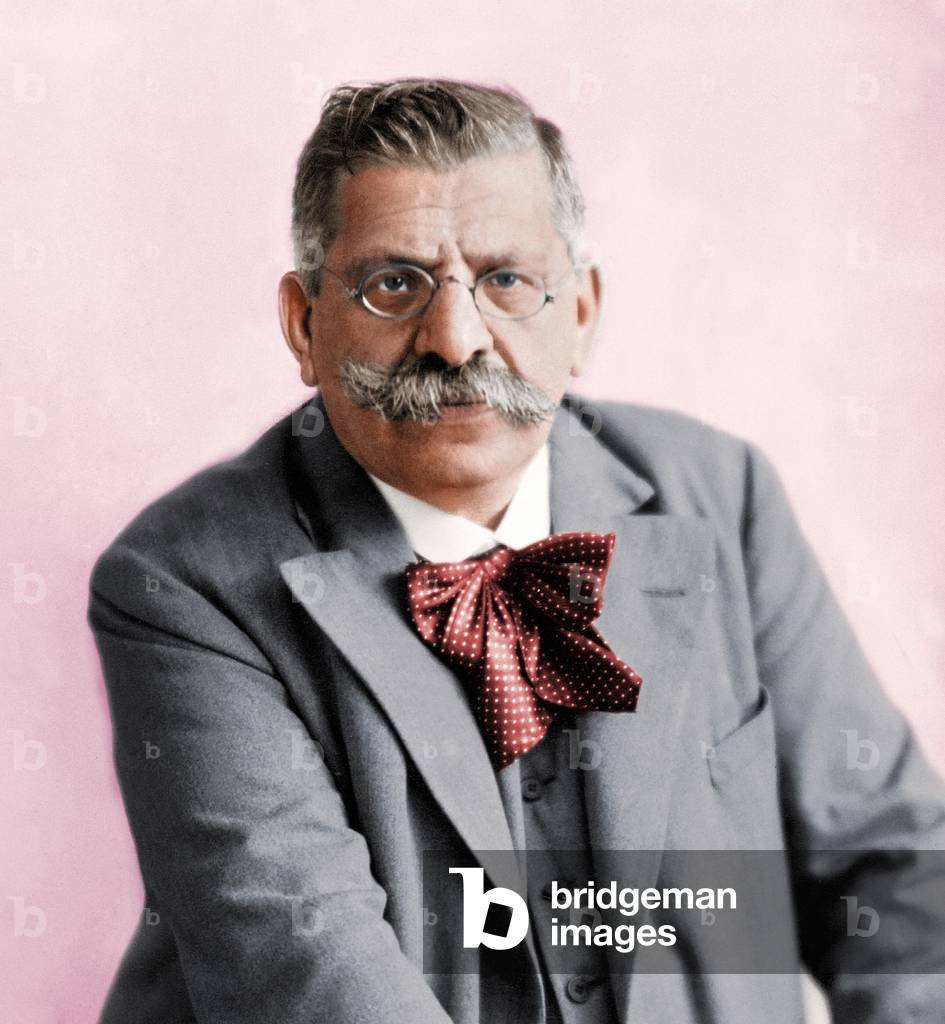
Being even more specific, I want to talk about “through science to justice”. This was the motto of the Scientific Humanitarian Committee, the first formal gay rights advocacy group, founded in Germany in 1897 with the goal of revising Paragraph 175 of the German Imperial Code, which criminalised sexual relationships between men. It was co-founded by one Magnus Hirschfeld, one of the earliest – and most remembered – sexologists and gay rights campaigners. This motto was representative of the belief that better scientific understanding of homosexuality would eradicate homophobia from society; knowledge bringing not power, but kindness and understanding. The Scientific Humanitarian Committee, as well as having doctors like Hirschfeld, had international members from varying professions, including lawyers and poets, who worked for over 30 years to try and achieve these ends.
In Hirchfeld’s case, the fight for justice was sparked by a blatant miscarriage of justice; Oscar Wilde’s imprisonment for “indecency”. Wilde’s poem, “The Ballad of Reading Gaol” so touched him that he was compelled to action. To Hirschfeld, laws criminalising homosexuality left people open to blackmail, and criminalised a community that he believed spanned the globe. To understand more meant breaking taboos, and speaking on subjects like suicide; in interviewing gay men about this topic, he came to the conclusion that life in society at the time was literally unbearable for gay men. The Scientific Humanitarian Committee was thus committed to the argument that homosexuality was not a lifestyle choice or a disorder, and that they could prove this with science, with Hirschfeld quoted as saying “homosexuality was part of the plan of nature and creation just like normal love.”(1) As part of their activism, they formed alliances, created and distributed sex education pamphlets, represented people in criminal trials, and took part in letter writing campaigns.
Hirschfeld later established the Institut fur Sexualwissenschaft in 1919, the first sexology research centre in the world, studying people who we would now likely label as gay, trans, and intersex; they also offered other medical treatments for the public, such as marriage counselling and contraceptive access. He coined the term “transvestite” to describe what we would now call transgender, and he and his colleagues at the clinic pioneered and performed many early surgeries; additionally, he offered these patients work, menial as it may have been, and issued them with certificates that, when presented to police, established a medical need to them to skirt homophobic laws, allowing some reprieve from police harassment. He understood homosexuality and transvestism as biologically determined variants of different aspects of human sex, such as sex drive, and internal sense of identity; he argued that no person was 100% masculine or feminine in all aspects. His clinic housed a library and archive, a museum, and educational resources for the public; his work was not closed off, or only for fringe academics, but instead it was part of the public discourse that was abound in the Weimar Republic.
Of course, Hirschfeld and his work were not at all perfect; in the modern day, some of his methodology and his beliefs would be considered highly problematic, falling in line with eugenicist thinkers of the day, despite his campaigning on behalf of minority groups. Indeed, many of his assertions about gay, intersex and transgender identities were criticised at the time by members of the community who did not see themselves reflected in his ideas. These criticisms, as valid as they are, do not erase a lot of the good of his clinic, and his pioneering role in early queer activism.
However, at the time, backlash against Hirschfeld’s ideas was immediate for him. Hirschfeld himself was physically assaulted multiple times; the Institut fur Sexualwissenschaft was destroyed in a Nazi raid, a majority of his research burned in the process; and, in the years that followed, many of us were incarcerated and murdered during The Holocaust.
Following on from the Committee and the Institut, in 1913, we in the UK had “The British Society for the Study of Sex Psychology”, an organisation similar to Hirschfeld’s which was in fact co-founded by him. It had similar goals and aims to the Scientific Humanitarian Committee: combatting discrimination using scientific research, or, more specifically, “to advance a particularly radical agenda in the field of sex reform, based on the writings of gurus such as [Edward] Carpenter and [Havelock] Ellis.”(2) It was active for several decades, and, as well as advocating on behalf of the LGBTQIA+ community, they also hosted meetings on abortion, sex education, birth control, marriage, and divorce – all controversial topics, both at the time and, sadly, today. Knowing that famous writers and thinkers of the day, such as E. M. Forster and George Bernard Shaw, were campaigning on this matter over 100 years ago makes my heart swell with, well, pride.
Since Hirschfeld died in 1935, many strides have been made in creating understanding and compassion for my community, and many of those strides have come from personal testimony and scientific research. Many British transgender people from the early 20th century – some of them, like Lily Elbe, being patients of Hirschfeld – would write their own accounts of their medical and social transitions. In the case of Michael Dillon, he was able to write extensively about his testosterone treatment, and, once he had changed his name and become a Buddhist monk, on the intersections of his spirituality and gender; as a medical assistant, he was both the subject of a pioneering transgender surgery, but also a collaborator, teaming up with his surgeon to perform the first gender-confirmation surgery on a transgender woman, Roberta Cowell, in the UK. As these surgeries began producing better results, and more people began to research the topic, trans healthcare crept out of the shadows. John Randell opened the Charing Cross gender identity clinic in 1966, having completed his own thesis on the subject. Between 1979 and 1999, viewers at home were able to watch the going’s on of this clinic for themselves thanks to the multi-part documentary series “A Change of Sex”, which showed the gender transition of an ordinary British woman, Julia Grant, as it happened, including her interactions with John Randell himself. In the legacy of similar documentary films in the decades since, we now have the film project “My Genderation”, started by film makers Fox Fisher and Lewis Hancock. For better or for worse, it’s never been easier for us to chronicle and share our lives, and transgender people are more visible than ever.
Meanwhile, research and visibility on gay and lesbian sexuality has helped society make strides on this area as well. Renowned writer Vita Sackville-West referenced Hirschfeld in her memoir, “A Portrait of a Marriage”. Using her own bisexuality and relationships as a case study, she made the case for her orientation as being natural, and scientifically verifiable; despite expressing shame in her sexuality, she wrote “it will be recognized that many more people of my type do exist than under the present-day system of hypocrisy is commonly admitted”.(3) And recognise it, people did; about 30 years after she wrote this memoir, The Kinsey Reports were published. These reports, one for males and one for females, surveyed people on their sexual behaviour, and plotted it on a grid scale from 0 to 6; 0 represented 100% heterosexual behaviour, and 6 represented 100% homosexual behaviour, with varying degrees of bisexuality representing numbers 1 through 5, and a 7th point – an X – indicating those with “no socio-sexual contacts or reactions,” what we might call asexuality today. The report on males found that over a third of the men surveyed had had at least one gay sexual experience in their lives(4); for both males and females, about 11% were classed as equally homosexual and heterosexual.(5) The lead writer, Alfred Kinsey, is quoted as saying, “It is a fundamental of taxonomy that nature rarely deals with discrete categories […] The living world is a continuum in each and every one of its aspects.”(6) Despite criticisms of its methodology, these reports went on to become two of the most influential scientific papers in history.
We now have the legal rights to marriage and civil partnership, medical and legal gender transition, and access to reproductive technologies and adoption; much of this coming from the work of gay advocacy groups, and the emerging proof that, as Hirschfeld had claimed, LGBTQIA+ experiences and identities are ordinary, mundane, and incredibly common. Different studies have our numbers be between 3% (7) and 20%.(8)
But if there is Justice through science, there can be injustice through quackery; bigotry and discrimination that wears the skin of progress and reason. Science is, after all, just a word we give for how we identify and describe things in the world, and if someone wants to cherry-pick data and present an argument with flawed or misinterpreted evidence, then it will be evidence enough for the people who want to believe it. And where there is progress, there is often strong backlash to that progress.
Across the world, at least 1.7% of people are born intersex, or with some kind of variation in genitalia, sex organs, chromosomes, and hormones. For many years, the treatment for infants with “ambiguous” sexual characteristics has been to perform surgery, often unnecessary and non-consensual; this was seen as acceptable because of the work of one Dr. John Money, who theorised that, after putting an intersex infant through genital surgery, you could then raise the child as their newly-assigned sex with no problems. In the 60s, Dr. Money was presented with a young boy, David Reimer, who’d been mutilated in a circumcision gone wrong, and he used this as his chance to prove his theory; he abused this little boy into living as a girl, claiming in the resulting paper that Reimer was living quite happily this way. Eventually, Reimer came forward to say that he had identified as male from a young age. Even now, despite how David Reimer is a case study in why surgery on intersex children is immoral and of how you cannot change a person’s innate gender identity through force, and despite Reimer later coming to use gender-affirming healthcare to reverse some of Money’s medical interventions, people still use his tragic life and early death to make anti-trans talking points, due to Money’s work with adult trans patients. It is still legal in this country to perform corrective surgery on intersex infants.
The 2020 book “Irreversible Damage: The Transgender Craze that’s Seducing Our Daughters,” by journalist Abigail Shrier, popularised the mental health condition of “Rapid-Onset Gender Dysphoria.” ROGD is the claim that young “girls” are being tricked into identifying as transgender due to peer influence and “social contagion”, and how gender-affirming care should not be given in these cases. In her eyes, there might be one or two genuine trans people coming forward for treatment, but for the majority, they are “high-anxiety, depressive (mostly white) girls”.(9) The original paper detailing ROGD was written by one Lisa Littman; Littman’s evidence consisted of interviewing the parents of transgender people, who were sourced from gender-critical anti-trans websites, and formed primarily around the parent’s perception that their child’s dysphoria appeared to be sudden. Despite how deeply flawed the methodology of this paper was, it has been cited in many anti-LGBT censorship laws in the US; many parties now wish to bring back elements of the homophobic law, Section 28, which banned the teaching of homosexuality “as a pretended family structure” in schools, in an effort to prevent this “social contagion”.
Earlier this year, The Cass Report was an investigation into the operations of the Gender Identity Development Service (GIDS) at The Tavistock Clinic; despite the investigation being prompted by clinicians’ concern about the care of gender-diverse teenage patients treated as the demand for the clinic’s services had increased so significantly, many of the teenaged patients who were questioning their gender identity, and contacted and interviewed for the report later told the press that they felt that their views were ignored or misrepresented.(10) The website TransActual, as part of their review of the Cass Report,(11) had several critiques of the methodology and contents, including the dismissal of a majority of the medical research supporting gender-affirming care, and the undermining of Gillick Competence – the legal standard for deciding whether someone under the age of 16 can consent to their own medical treatment, even if their wishes are in conflict with the wishes of their parents.(12) As a direct result of The Cass Report, medical transition has now been banned in under-16s, despite these critiques.
The alternative that the Cass Report presents is “Gender exploratory therapy”, or GET; the idea that clinicians, rather than taking patients at their word, instead assess them for any other mental or emotional issues first, as part of a holistic treatment plan. While this sounds grand on paper, transgender clinicians and the trans community see this as conversion therapy by another name. They are concerned that the presence of any trauma or co-morbid conditions, such as autism, will be taken as the real cause of someone’s gender issues. Often the unspoken goal of this therapy is to delay or deny transition, and, if possible, convince the patient to “desist”, or stop identifying as trans. There were no transgender clinicians allowed on the Cass Report team; there were, however, clinicians who were active advocates of GET.(13) The popularity of GET as the alternative to gender-affirming care coincides with the government’s initial plans to ban conversion therapy for LGB people, but not trans people, in part on the basis that a ban on conversion therapy would make GET more difficult to legally get away with;(14) indeed, Dr. Hilary Cass has commented that, despite abhorring the idea of conversion therapy, she is worried that a ban would “frighten” clinicians away from working with gender-questioning youth.(15) It took several months for the government to confirm a complete ban of conversion therapy, and the response has been cautious rather than joyful.(16)
As a result of things like this, and many more incidents aside, the general climate around all LGBTQIA+ people is feeling more and more fraught, all the time. But what can be done about this injustice? Your guess is as good as mine; that our society has taken so many leaps backwards in the span of a few short years makes me genuinely afraid and hopeless for the future. None of us are safe; all of us are under attack.
And, as a queer-indentified individual, it’s personal, too. Every time I go out with my wife, I’m worried that we’re going to be attacked; insults and slurs have been thrown in our direction before. Our plans to potentially immigrate are complicated by same-sex marriage not being a universal right. My own non-binary transition has also stalled to a halt, as I’ve been placed on the back of a waiting list that has no timely hope of resolution. And the clock is ticking: as adult gender services are being investigated, I know that my right to transition, as a neurodivergent person, may be taken away. One part of me wants to do anything I can to transition, but the other part of me asks, “What’s the point? You don’t have the money; the NHS will never help you; and only a handful of people acknowledge your genderqueer identity at all, even after you’ve come out to them. You might as well just Desist.”
When given over to malaise and overthinking, I’ve tried taking heart from learning about the history and ideas of my community, and from the numerous spiritual teachings that have reflected and accommodated us all with love and dignity. I’ve been rereading the queer theories of Kate Bornstein’s book “Gender Outlaw”, which posits the role of my community as being great fools and truth-tellers, and I’ve been tapping into the eco-feminist writings of Donna Harraway, taking great personal inspiration from her concept of The Cyborg, a chimera that connects with others through affinity rather than identity labels. I’ve been pondering spirituality, from Buddhist ideas of impermanent identities, through to research on how frequently gender-nonconformity and divine wisdom have been conflated throughout time and space, and even thinking about Julian of Norwich’s assertions of the androgynous nature of God and Jesus; it paints a picture to me that, throughout history, we have been embraced, welcomed, seen as special.
All that self-reflection’s very nice, of course, but maybe the true justice is to be found in the friends we made along the way; more than any of that, I’ve been thinking about the connections I’ve made and the communities around me. I’m thinking about my many dear friends, some of whom are here today, all of them here in spirit; many of them have worked hard to support me, with no expectation of reward. I’m thinking of my family, who love but do not understand – but are trying their hardest to. I’m thinking of all of you here, and I’m hoping that, if anyone leaves this room with a little more compassion in their hearts, then I’ll have done my job. I’m remembering how it felt to get married here, how everyone came together in kindness and love to celebrate the holy blessing of our queer relationship. I’m thinking about my beloved wife, how she holds me when I’m in turmoil, and how beautiful it is to see her slowly unfurl into her newest, most treasured self.
The other day, a friend said to me that I should let myself be held by the community; perhaps that’s the way forward through all of this. We’ve always been here, and we always will, because Hirschfeld was right to say that we are part of the normal fabric of life. Perhaps the wheel of time can keep on turning, and what’s old will be new again; and maybe, by walking hand in loving hand together, as Hirschfeld once said, “Soon the day will come when science will win victory over error, justice a victory over injustice, and human love a victory over human hatred and ignorance.”(17)
Bibliography
1. Domeier, Norman The Eulenburg Affair: A Cultural History of Politics in the German Empire, Rochester: Boydell & Brewer, 2015 p. 128.
2. Lesley A. Hall, ‘”Disinterested Enthusiasm for Sexual Misconduct”: The British Society for the Study of Sex Psychology, 1913-47’, Journal of Contemporary History, Vol. 30, No. 4 (Oct. 1995), pp.665-686
3. Johnston, Georgia (Autumn 2004). “Counterfeit Perversion: Vita Sackville-West’s ‘Portrait of a Marriage”. Journal of Modern Literature. 28 (1): 124–137
4. Kinsey, et al. (1948), Sexual Behavior in the Human Male, p. 656
5. Kinsey, et al. 1948. Sexual Behavior in the Human Male, Table 147, p. 651 and Kinsey, et al. 1953. Sexual Behavior in the Human Female, Table 142, p. 499
6. Kinsey, et al. (1948), Sexual Behavior in the Human Male, pp. 639, 656.
7. https://www.bbc.com/news/uk-64184736
9. Shrier, Abigail (November 24, 2020). “Gender activists are trying to cancel my book; Why is Silicon Valley helping them?”. Pittsburgh Post-Gazette.
10. Hoskin, Rowenna (April 12, 2024). “Gender care review disappointing, says trans man.” BBC News. https://www.bbc.com/news/articles/cv20l497xvjo
11. TransActual (May 7th 2024). “The Cass Report – A Briefing.” https://transactual.org.uk/wp-content/uploads/TransActual-Briefing-on-Cass-Review.pdf
12. Hansfield, Amanda (April 10, 2024). “Five key takeaways, concerns and questions from the Cass report.” PinkNews. https://www.thepinknews.com/2024/04/10/cass-report-five-key-takeaways/
13. Moore, Mallory (December 20 2022). “NHS Trust uses “Gender Exploratory” training materials promoting conversion therapy lobbyists.” https://transsafety.network/posts/gender-exploratory-nhs-training/ AND Cugini, Elia (April 20 2024). “Do no harm? The trouble with Cass’ therapy recommendations.” https://transsafety.network/posts/whats-the-harm-in-the-cass-recommendations/
14. Gallagher, Sophie and Parry, Josh (April 1 2022). “Conversion therapy: Ban to go ahead but not cover trans people”. BBC News. https://www.bbc.co.uk/news/uk-60947028
15. Adu, Aletha and Gentleman, Amelia (April 11 2024). “Hilary Cass warns Kemi Badenoch over risks of conversion practices ban.” https://www.theguardian.com/world/2024/apr/11/hilary-cass-warns-kemi-badenoch-over-risks-of-conversion-practices-ban
16. “What is conversion therapy and when will it be banned?” BBC Explainers (January 24 2023) . https://www.bbc.com/news/explainers-56496423
17. The Legacy Project page on the Scientific Humanitarian Committee. https://legacyprojectchicago.org/milestone/scientific-humanitarian-committee
 Ipswich Unitarian Meeting House