It must be admitted that we don’t really know much about the birth of Jesus. There isn’t much about it in the Bible and what there is, in the two gospels that mention it, is mostly contradictory and much embellished, to put it mildly, with mythological signs and wonders.
The sincere concern of the evangelists we know as Matthew and Luke was, basically, twofold. Firstly, to show – to their own satisfaction and that of the early Christian communities they wrote for – that the birth of Jesus was the fulfilment of prophecies, prophecies in the Hebrew Bible – our Old Testament – about the coming of the promised Messiah. And secondly, in a world where the births of gods, emperors and heroes were routinely portrayed as being attended by supernatural events, it was both predictable and necessary that, for Christians, the birth of their Saviour should have its own miraculous accompaniment. Some still think so, although for others – such as myself – the traditional Christmas stories are not history as we would understand it. Rather they are a way of framing the birth of Jesus with stories and images which convey a spiritual understanding of a simple natural event, but one with virtually unparalleled historical consequences for the human race and the human spirit. Viewed with the eye of faith and a mind open to myth and symbol as vehicles of truth, the Nativity stories in Matthew and Luke have a meaning and a beauty that a narrow literalism or shallow scepticism cannot appreciate.
I am much drawn to a verse in Luke’s gospel in which Mary, after the departure of the wondering shepherds, is said to have “treasured up all these things and pondered over them” (Luke 2: 19). That, to me has the ring of truth, not because of the shepherds and their tale of angel hosts, but because Mary had just brought a new human being into the world – and what greater cause for pondering is there!
At root, the Christmas story is about a divine initiative to redeem and save humanity through the birth of a baby. But it was who that baby became, and what he taught and did, that was transformative. Without that the Nativity stories would have no meaning. Within the infant Jesus was the potential to show his fellow human beings the best way of life that we can follow – the way of love and all which that implies and includes. The birth of that baby boy, like the birth of most babies, must have changed the lives of those closest to him, but it was also to change the world, to save countless lives from the human condition’s deepest depths and raise them up to what Saint Paul called “the glorious liberty of the children of God” (Romans 8: 21).
Some might say that the potential in Jesus was unique, the consequence of his unique divine nature, his unique status as God the Son, but that removes him from us and denies his true humanity. But although Jesus does indeed reflect divinity, it is a divinity that we all share. We are called to live up to that divinity by being human to the best of our ability. If we enter into the true spirit of Christmas we will see the divine in every newborn baby, and pledge ourselves to ponder it and nurture it so that they will grow up to bless the world with their lives. Tragically, this wonderful potential is too often cut off by cruelty and violence, or stifled, stunted and perverted by human failure to be truly human, as represented in the story by King Herod, but somehow the potential survives, born anew – not only at Christmas – but whenever one of the sisters and brothers of Jesus enters the world. Let us always be ready to welcome it, with the enthusiasm of the shepherds, the generosity of the Magi, and the loving wonder of Mary.
Cliff Reed
Christmas 2024 (CMR181224)THE POWER OF A CHILD
It must be admitted that we don’t really know much about the birth of Jesus. There isn’t much about it in the Bible and what there is, in the two gospels that mention it, is mostly contradictory and much embellished, to put it mildly, with mythological signs and wonders.
The sincere concern of the evangelists we know as Matthew and Luke was, basically, twofold. Firstly, to show – to their own satisfaction and that of the early Christian communities they wrote for – that the birth of Jesus was the fulfilment of prophecies, prophecies in the Hebrew Bible – our Old Testament – about the coming of the promised Messiah. And secondly, in a world where the births of gods, emperors and heroes were routinely portrayed as being attended by supernatural events, it was both predictable and necessary that, for Christians, the birth of their Saviour should have its own miraculous accompaniment. Some still think so, although for others – such as myself – the traditional Christmas stories are not history as we would understand it. Rather they are a way of framing the birth of Jesus with stories and images which convey a spiritual understanding of a simple natural event, but one with virtually unparalleled historical consequences for the human race and the human spirit. Viewed with the eye of faith and a mind open to myth and symbol as vehicles of truth, the Nativity stories in Matthew and Luke have a meaning and a beauty that a narrow literalism or shallow scepticism cannot appreciate.
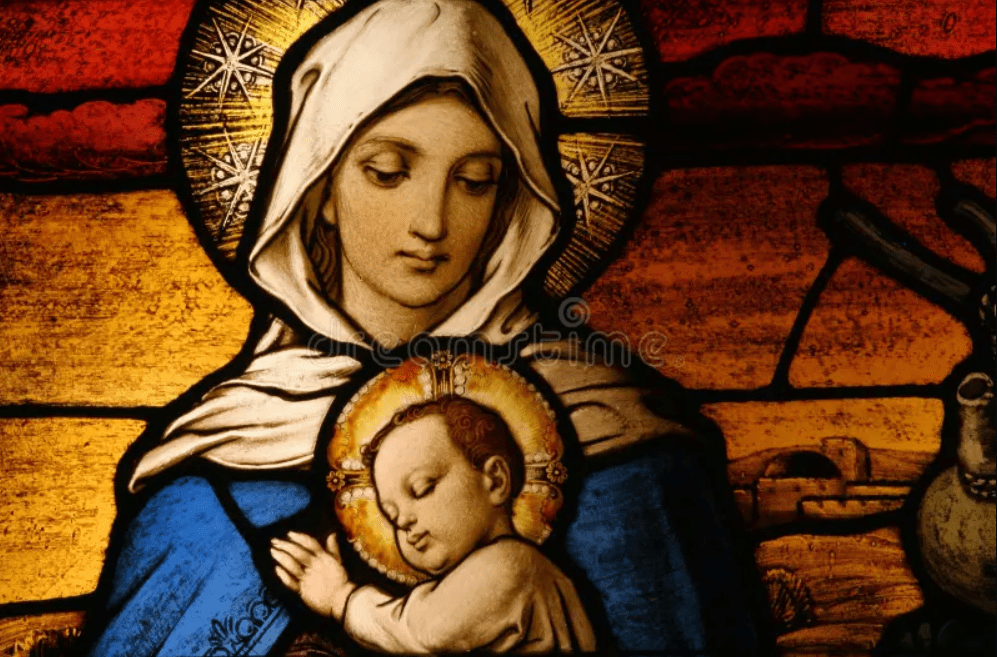
I am much drawn to a verse in Luke’s gospel in which Mary, after the departure of the wondering shepherds, is said to have “treasured up all these things and pondered over them” (Luke 2: 19). That, to me has the ring of truth, not because of the shepherds and their tale of angel hosts, but because Mary had just brought a new human being into the world – and what greater cause for pondering is there!
At root, the Christmas story is about a divine initiative to redeem and save humanity through the birth of a baby. But it was who that baby became, and what he taught and did, that was transformative. Without that the Nativity stories would have no meaning. Within the infant Jesus was the potential to show his fellow human beings the best way of life that we can follow – the way of love and all which that implies and includes. The birth of that baby boy, like the birth of most babies, must have changed the lives of those closest to him, but it was also to change the world, to save countless lives from the human condition’s deepest depths and raise them up to what Saint Paul called “the glorious liberty of the children of God” (Romans 8: 21).
Some might say that the potential in Jesus was unique, the consequence of his unique divine nature, his unique status as God the Son, but that removes him from us and denies his true humanity. But although Jesus does indeed reflect divinity, it is a divinity that we all share. We are called to live up to that divinity by being human to the best of our ability. If we enter into the true spirit of Christmas we will see the divine in every newborn baby, and pledge ourselves to ponder it and nurture it so that they will grow up to bless the world with their lives. Tragically, this wonderful potential is too often cut off by cruelty and violence, or stifled, stunted and perverted by human failure to be truly human, as represented in the story by King Herod, but somehow the potential survives, born anew – not only at Christmas – but whenever one of the sisters and brothers of Jesus enters the world. Let us always be ready to welcome it, with the enthusiasm of the shepherds, the generosity of the Magi, and the loving wonder of Mary.
Cliff Reed
Christmas 2024 (CMR181224)
 Ipswich Unitarian Meeting House